
- Window tint naturally degrades over time due to UV exposure, temperature changes, and daily wear.
- Fading, bubbling, peeling, and haziness are clear signs that replacement may be necessary.
- Reduced heat rejection and weakened UV protection can impact comfort and interior preservation.
- Damaged or outdated tint may create safety hazards or legal compliance issues.
- Upgrading to modern tint technology can improve performance, durability, and long-term vehicle value.
Automotive window tinting is an essential way to protect your vehicle’s interior, enhance passenger comfort, and maintain privacy. Over the years, window tint can lose its effectiveness due to constant exposure to sunlight, weather changes, and regular use. Car owners in all climates, including those considering ceramic coating for cars in Livonia, MI, should be aware of the signs that indicate window tint replacement is necessary. Timely maintenance will help safeguard both your driving experience and your vehicle’s condition.
Besides enhancing aesthetics and comfort, a properly maintained window tint ensures your car’s windows continue to block harmful UV rays and provide the desired level of privacy. Ignoring the warning signs of failing window tint may expose you to more sun damage, discomfort, and even legal issues if your film no longer complies with state laws.
Being proactive about tint maintenance is one of the simplest ways to retain your car’s value. Upgrades can also improve your vehicle’s overall performance and longevity. If you regularly inspect and address any issues with your tint, you’ll enjoy clear visibility and reliable protection year-round.
When window tint begins to deteriorate, it affects not only your vehicle’s appearance but also its function. Looking out for these common indicators can help prevent further damage and keep your car in top condition.
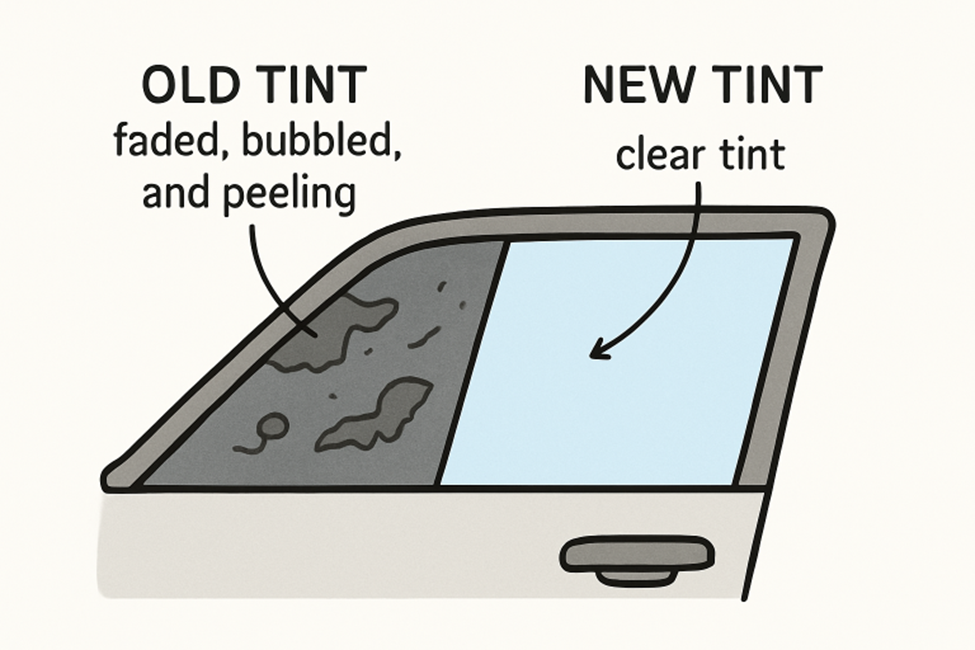
Fading or Discoloration
One of the most visible signs that your car’s window tint needs attention is a noticeable color change. Most window tints gradually fade or turn a purplish color after long-term exposure to sunlight. Many vehicle owners who begin searching for automotive ceramic coating near me do so after noticing this type of discoloration, since upgrading to ceramic-based protection can improve both appearance and durability. This happens because the tint’s dye molecules break down as they absorb ultraviolet (UV) rays. Not only does this fading detract from your vehicle’s aesthetics, but it also signals weakened UV protection. New window films block up to 99% of UV light, but faded tints only block about half that, increasing the risk of sun damage and reducing passenger comfort.
Bubbling or Peeling
Bubbling, peeling, or lifting at the film’s edges is a clear red flag. These issues occur when the adhesive beneath the tint starts to break down. Temperature changes, humidity, and prolonged exposure to sunlight can speed up this deterioration. Bubbling does more than mar your car’s appearance; it can obstruct your vision, especially at night or in direct sunlight, posing a safety hazard. If the edges of the tint are peeling, water and debris may get underneath, amplifying the problem. Swift replacement is the only solution once bubbling begins.
Reduced Heat Rejection
If you find your car interior feels hotter than usual, even when the air conditioning is running, your tint may have lost its heat-rejecting capabilities. As tint degrades, its ability to block infrared (IR) radiation decreases, leading to elevated cabin temperatures. This can significantly affect driving comfort, especially during the summer months. Upgrading to a modern, high-performance ceramic or metallic film will restore the heat-blocking efficiency your car needs.
Hazy or Blurry Windows
Aging or poor-quality window tint can make your glass look hazy or appear blurry, particularly at night or in direct light. This haze is often caused by the breakdown of tint materials or moisture trapped between layers. Such visual distortion reduces visibility, posing a clear safety concern and warranting immediate replacement.
Scratches and Surface Damage
With regular use, the tint’s surface can become scratched or gouged from window operation, cleaning, or accidental contact with sharp objects. Damaged tint loses its ability to provide full UV protection and privacy. Once scratched or torn, repair is not feasible; replacing the affected film is necessary to regain the original benefits.
Outdated Technology
Window tinting technology is constantly evolving, with modern films offering superior UV blocking, heat reduction, and extended durability. If your film was installed over ten years ago, you may not be taking advantage of these improvements. Investing in a new, advanced film can deliver enhanced performance while keeping your vehicle comfortable and protected for years to come.
Legal Compliance Issues
Regulations regarding window tint darkness, reflectivity, and color are updated from time to time. If your existing tint was applied under older guidelines, it might no longer be compliant. This can subject you to fines, inspection failures, or the requirement to remove tint. Verifying and updating your window film as necessary keeps your vehicle legal and safe.
Decreased Privacy
Older window tints can lose opacity over time, making it easier to see into your car. This loss of privacy can be both a personal concern and a security risk, as valuable items inside your car become visible. Installing a replacement film restores your desired level of privacy and deters opportunistic theft.
Final Thoughts
Recognizing the signs of window tint deterioration is crucial to maintaining your car’s function and appearance. Addressing these issues quickly with modern solutions can enhance comfort, safety, and compliance with local regulations. For car owners interested in broader protection solutions, exploring options like ceramic coating can further enhance vehicle value preservation.